
Baltimore City Death Index
Baltimore City death index records go back to 1875, making this one of the oldest continuous death registration collections in the state, and the city's independent status means its records are completely separate from Baltimore County's. Whether you need a recent death certificate from City Hall or are searching the CM1132 historical series at the Maryland State Archives, the process here differs from every other Maryland jurisdiction.
Baltimore City Overview
Baltimore City Vital Records: Modern Death Certificates
Baltimore City's vital records office handles death certificates for deaths that occurred in the city from 2015 to the present. The office is in City Hall at Room 250, 100 N. Holliday Street, Baltimore, MD 21202. The phone number is (410) 396-3124. Hours are Monday through Friday, 8:30 a.m. to 4:30 p.m. The fee is $20.00 per copy. These are the records for anyone who died in Baltimore City during the most recent period covered by the local office.
To get a certified death certificate from this office, you must bring a valid photo ID and be able to demonstrate a qualifying relationship to the deceased. Baltimore City follows Maryland state law on eligibility, which limits access to surviving family members, authorized legal representatives, and funeral directors. If your request is for a legal purpose such as an estate filing or insurance claim, bring any supporting documents that establish your role and relationship. The staff at Room 250 process these requests regularly and can guide you if you are not sure what to bring.
For deaths that occurred between 1972 and 2014, the city vital records office does not hold those records locally. Those go through the Maryland Division of Vital Records at the state level. For deaths before 1972, the Maryland State Archives is the appropriate source. The 2015 cutoff is the same used by most Maryland counties for local records, but Baltimore City's historical collection extends much further back than any county's, which is a distinct advantage for researchers.
The Baltimore City Government website provides department information, city services, and links to vital records contacts. If the hours or fee at the City Hall office have changed since this page was updated, the city website will have current information. Always confirm before making a trip, especially if you are coming from outside the Baltimore area.
Baltimore City vs Baltimore County: Critical Difference
This point causes more confusion than almost anything else in Maryland records research. Baltimore City and Baltimore County are two completely separate jurisdictions. They share nothing but a name. A death that occurred in Baltimore City is recorded in Baltimore City's system. A death that occurred in Baltimore County is recorded in Baltimore County's system. You cannot get a Baltimore City death certificate from Baltimore County, and you cannot get a Baltimore County death certificate from Baltimore City.
In the SE151 Death Index at the Maryland State Archives, Baltimore County uses code 3. Baltimore City uses code 30. These are different numbers on purpose. If you search SE151 and pull results under code 3, you are looking at deaths in the county, not the city. If you pull results under code 30, you are looking at city deaths. Getting the code wrong means looking at the completely wrong set of records. For researchers who are not sure which jurisdiction a death occurred in, this distinction is critical to get right before ordering anything.
Baltimore City became an independent city separate from Baltimore County in 1851. Since then, they have maintained entirely separate governments, court systems, health departments, and vital records offices. There is no overlap. The city's records go back to 1875. The county's records start in 1898, 23 years later. If you are looking for a death from the 1870s through 1890s and the person lived in the Baltimore area, the record will be in Baltimore City's collection, not the county's. The county didn't start registering deaths until 1898.
Address is one way to tell which jurisdiction covers a death. Baltimore City has its own ZIP codes, its own street grid, and its own city limits. Suburbs like Towson, Catonsville, Pikesville, and Dundalk are in Baltimore County despite being close to the city. If you are not sure which side of the line a specific address falls on, the Baltimore City website can help confirm whether a location is within city limits.
Note: When searching any Maryland death record database, always confirm whether you need code 30 (Baltimore City) or code 3 (Baltimore County) before you begin. Mixing them up wastes time and can lead you to conclude a record doesn't exist when it actually does.
Historical Baltimore City Death Records Going Back to 1875
Baltimore City's death registration history starts in 1875. That is 23 years before Maryland counties began registering deaths in 1898. This means if you are researching a death in the Baltimore area from the late 19th century, Baltimore City may be your only source in the entire state. The Maryland State Archives holds the CM1132 series, which is the Baltimore City Death Index covering 1875 through 1972. This is the primary historical resource for city death research.
The CM1132 series is organized by certificate number ranges rather than alphabetically by name. This affects how you approach a search. You need to know or find the certificate number first, then use that number to locate the right portion of the series. Some certificate numbers are missing from the microfilm. Gaps exist where film was damaged, lost, or never created. Researchers should plan for this and not assume that a missing number means a death did not occur or was not registered.
Certificate numbering in Baltimore City changed over time. The earliest records used a simple numeric sequence. Later, the series shifted to an A series, then a B series, and then a C series as the volume of deaths increased and the numbering scheme needed to be updated. If you are searching for a death from a specific decade, knowing which series applies to that period helps you go directly to the right part of the collection rather than guessing. Archives staff at 410-260-6400 can tell you which series covers the year you need.
The Archives is at 350 Rowe Boulevard, Annapolis, MD 21401. Some portions of the CM1132 series are available digitally through the Archives' online collections. Others require an in-person visit or a written request. For genealogy research on Baltimore City deaths from 1875 through 1972, start by checking what is available digitally through the Archives guide pages before planning a trip to Annapolis.
This historical depth is one of Baltimore City's most valuable features for genealogists. Large immigrant communities, including substantial German, Irish, Polish, and Jewish populations, settled in Baltimore in the late 1800s and early 1900s. Many families who came to Baltimore during that era have ancestors whose only official death record is in the CM1132 series at the Archives. No other source in the state covers this period for the Baltimore area.
Baltimore City Death Index in the SE151 Database
Baltimore City Government at baltimorecity.gov provides access to city departments and services, including vital records for this independent Maryland jurisdiction.
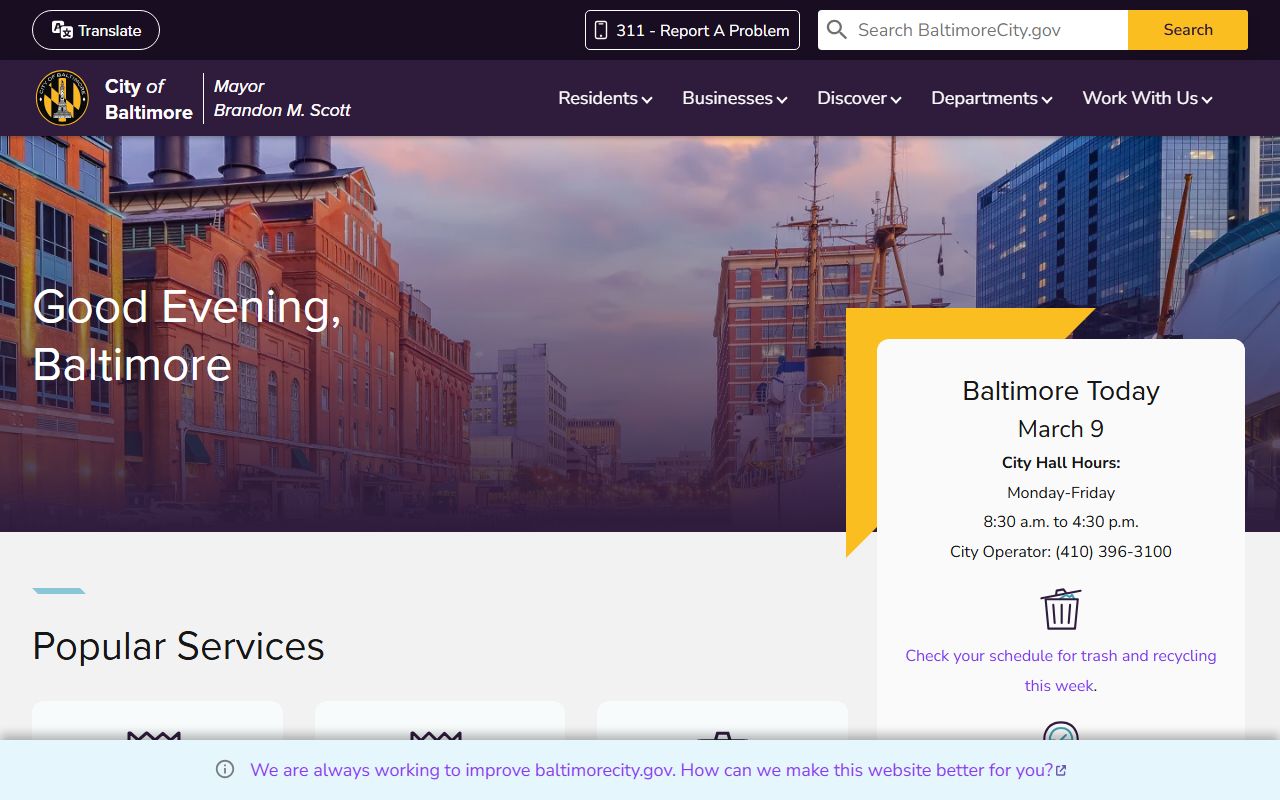
The city's vital records office at 100 N. Holliday Street handles death certificates for deaths that occurred from 2015 to the present.
For deaths from 1973 through 2014, Baltimore City is covered in the SE151 Death Index under code 30. You can search SE151 at no cost through the Maryland State Archives SE151 guide page. Searching by name and filtering to county code 30 returns only Baltimore City records. The index gives the person's name, date of death, and certificate number. That certificate number connects you to the original record for ordering a copy.
Baltimore City also has some unusual codes in the SE151 system: codes 46, 47, and 48. These codes were used for deaths that occurred in certain Baltimore City hospitals. If you search SE151 and expect to find a city record but get no result under code 30, try searching with these hospital codes. Deaths coded under 46, 47, or 48 represent city hospital deaths that were indexed separately. This detail trips up many researchers who search only for code 30 and miss records that are actually there under a different code.
The Baltimore City Council legislation portal at baltimore.legistar.com provides access to city ordinances and public records policies that govern death record access in Baltimore.
Baltimore City operates independently from Baltimore County, with its own legislative structure, record systems, and vital records office.
When you find an entry in SE151 under code 30, note the certificate number and the year. That combination is what you need when ordering a certified copy through the Archives or the state VSA. Do not rely on the index entry alone for legal purposes. The entry confirms the death and locates the record. The actual certificate, once ordered, is the document that has legal weight for estate filings, insurance claims, and similar needs.
Register of Wills and Probate Records in Baltimore City
The Maryland Register of Wills portal at registers.maryland.gov covers Baltimore City estate records and can be used to confirm death dates and family relationships.
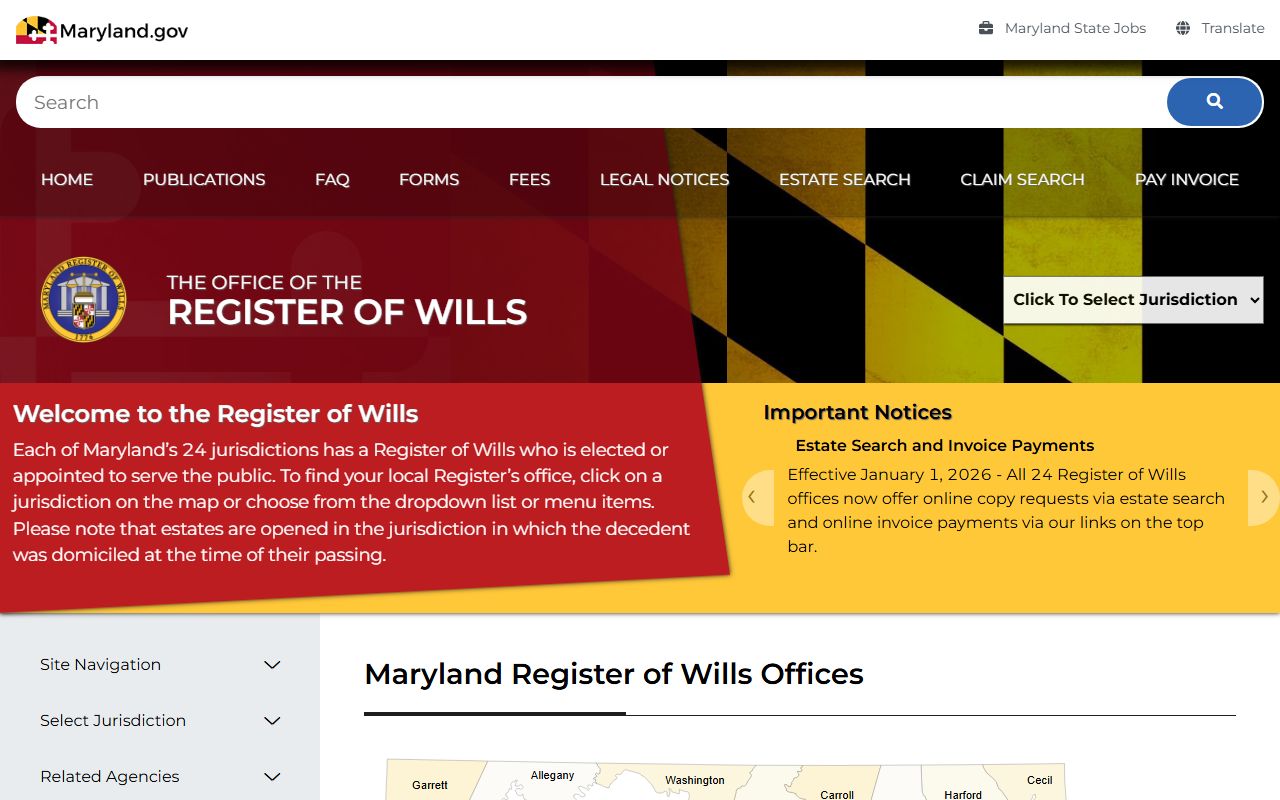
The Baltimore City Register of Wills is at 111 N. Calvert Street, Suite 314, and can be reached at (410) 333-3848.
When someone dies in Baltimore City and leaves an estate, probate takes place through the Baltimore City Register of Wills. The office is at 111 N. Calvert Street, Suite 314, Baltimore, MD 21202. The phone number is (410) 333-3848. Probate records are public and can be searched through the statewide Register of Wills portal. The portal covers estates from 1998 forward and allows free name searches. For older estates, contact the Baltimore City office directly or check the Archives.
Probate records serve as a useful supplement to death index research. When someone dies in Baltimore City and an estate is opened, the Register of Wills files typically include the date the estate was filed, the name of the personal representative, the attorney of record, and often the date of death. If you cannot obtain a certified death certificate for some reason, probate records may provide the death date you need to proceed with other research. This is especially useful for deaths that occurred in the period covered by older records where certified copies are harder to obtain.
Not every death in Baltimore City results in a probate filing. People who die with no assets, or whose assets pass outside of probate through joint ownership or beneficiary designations, may leave no estate record at all. But for deaths involving property, savings, or any kind of estate, the Register of Wills is a valuable parallel track to the death certificate itself. The Maryland Register of Wills online portal is free to search and does not require creating an account.
For historical probate records in Baltimore City going back before 1998, some have been copied by the Maryland State Archives and may be searchable or available for research through Annapolis. Contact the Archives at 410-260-6400 to ask about historical Baltimore City estate records. Baltimore City had a large and active estate system throughout the 19th and early 20th centuries, and those older probate files can be rich sources of death and family information for genealogists.
Ordering Baltimore City Death Records
For deaths from 2015 forward, go to City Hall, Room 250, 100 N. Holliday Street, Baltimore, MD 21202. Hours are 8:30 a.m. to 4:30 p.m. Monday through Friday. The fee is $20 per copy. Bring a valid photo ID and documentation showing your relationship to the deceased. This is the most direct route for recent Baltimore City death certificates.
If you cannot go to City Hall in person, VitalChek is a practical alternative. The VitalChek Maryland page handles online orders for Baltimore City death certificates with mailing. A service fee is added on top of the $20 state fee, but the process is straightforward. Orders are processed and mailed, which avoids the need to appear at City Hall during business hours.
For deaths from 1972 through 2014 that fall outside the City Hall period, the Maryland Division of Vital Records at the state level is the right office. The Maryland VSA death records page outlines mail order procedures. Include the full name of the deceased, the date of death, Baltimore City as the county, a copy of your photo ID, documentation of your relationship, and the fee. The state VSA covers the full state, including Baltimore City, for this period.
For historical records from 1875 through 1971, the Maryland State Archives holds the CM1132 series. Some portions are available digitally. Others require a written request or an in-person visit to Annapolis. The Archives death certificate order form is the starting point for historical Baltimore City requests. Provide as much information as you can, including the year of death, the full name, and any certificate number you found in the index, to help Archives staff locate the right record quickly.
The Maryland VSA home page covers all ordering channels and explains the eligibility rules that apply statewide, including in Baltimore City. If you are not sure which office to contact for a specific year, the VSA overview will point you in the right direction. Baltimore City's records span a longer period and more varied sources than any Maryland county, so knowing the year of death is the most important piece of information before you start.
Cities in Baltimore City
Baltimore City is itself an independent city and does not contain separate municipalities. All residents access death index records through the city's own vital records office and the Maryland State Archives.
Communities in Baltimore City access death index records through the city health department at City Hall, Room 250, 100 N. Holliday Street.
Nearby Jurisdictions
These counties are adjacent to Baltimore City. Each maintains its own death index records and vital records office.